
INDUSTRY INSIGHTS
Practical guides to parts cleaning for Australian workshops. Explore how solvent-free bioremediating parts washers work, what to consider when choosing a machine, and how maintenance and workload affect running costs.
ROwasher uses microbes to break down oil and grease in its cleaning fluid, helping extend fluid life. Used filters, sludge and any spent fluid still need appropriate handling and disposal. Follow the product SDS, your workplace risk assessment and applicable local requirements.
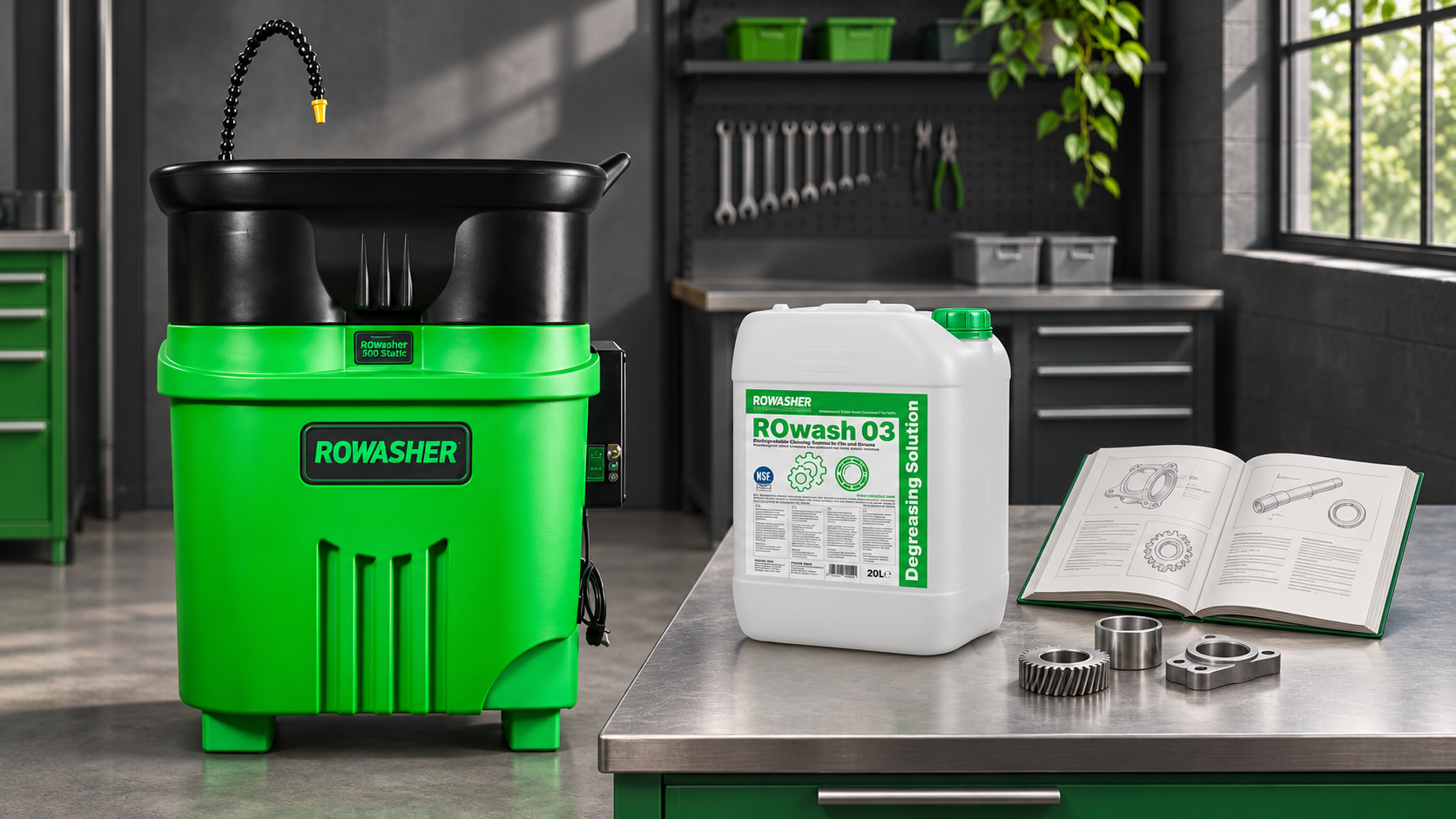
Which Parts Washer Fluid Should You Use? A Workshop Checklist
Choose parts washer fluid around your machine, materials and contamination. A practical workshop checklist covering ROwash 03, ROwash 06 and ROwash Bike.
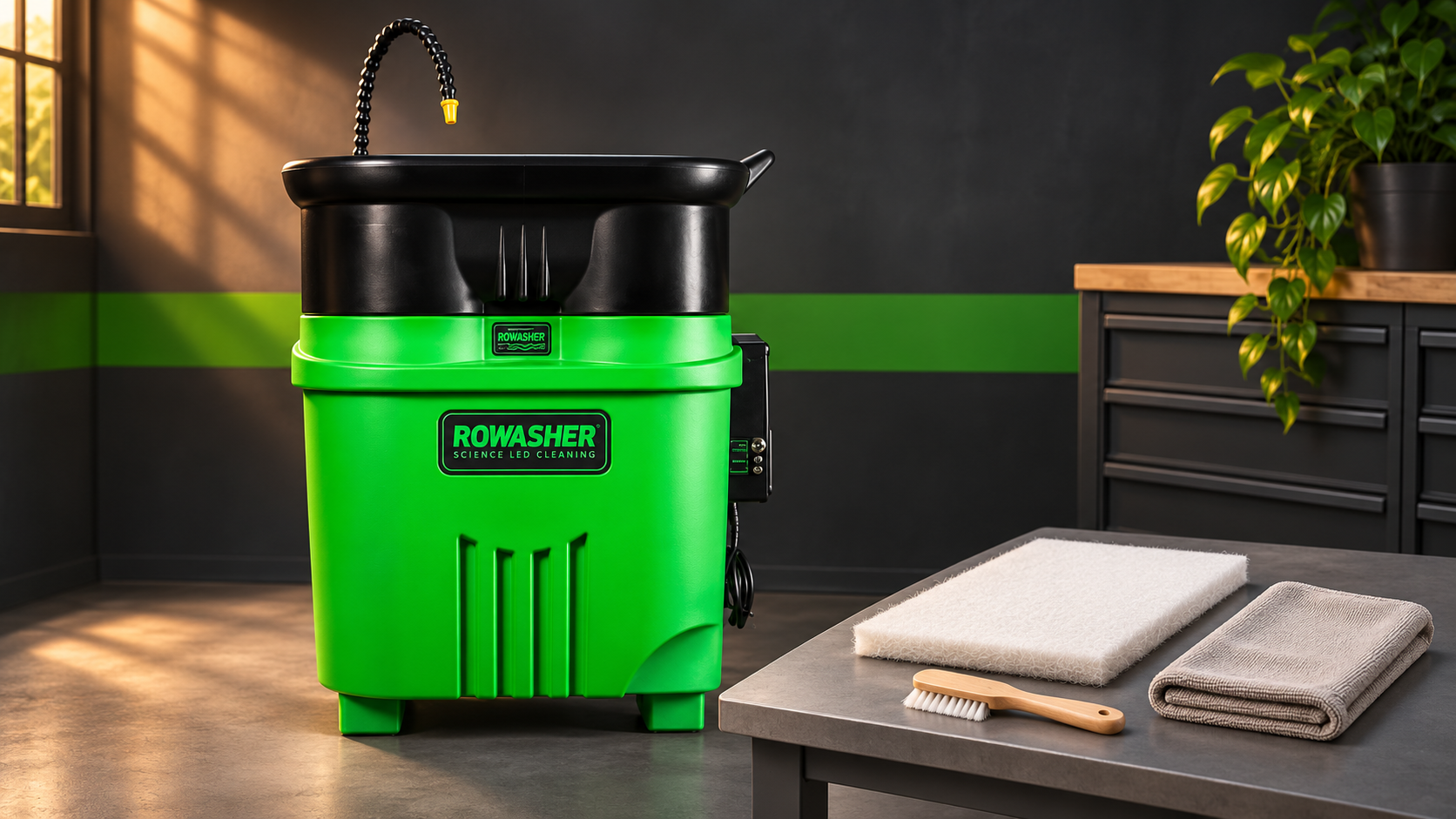
ROwasher vs CRC SmartWasher: A Practical Workshop Comparison
Compare ROwasher and CRC SmartWasher for Australian workshops: mobile model specifications, package inclusions, maintenance and consumable warranty considerations.
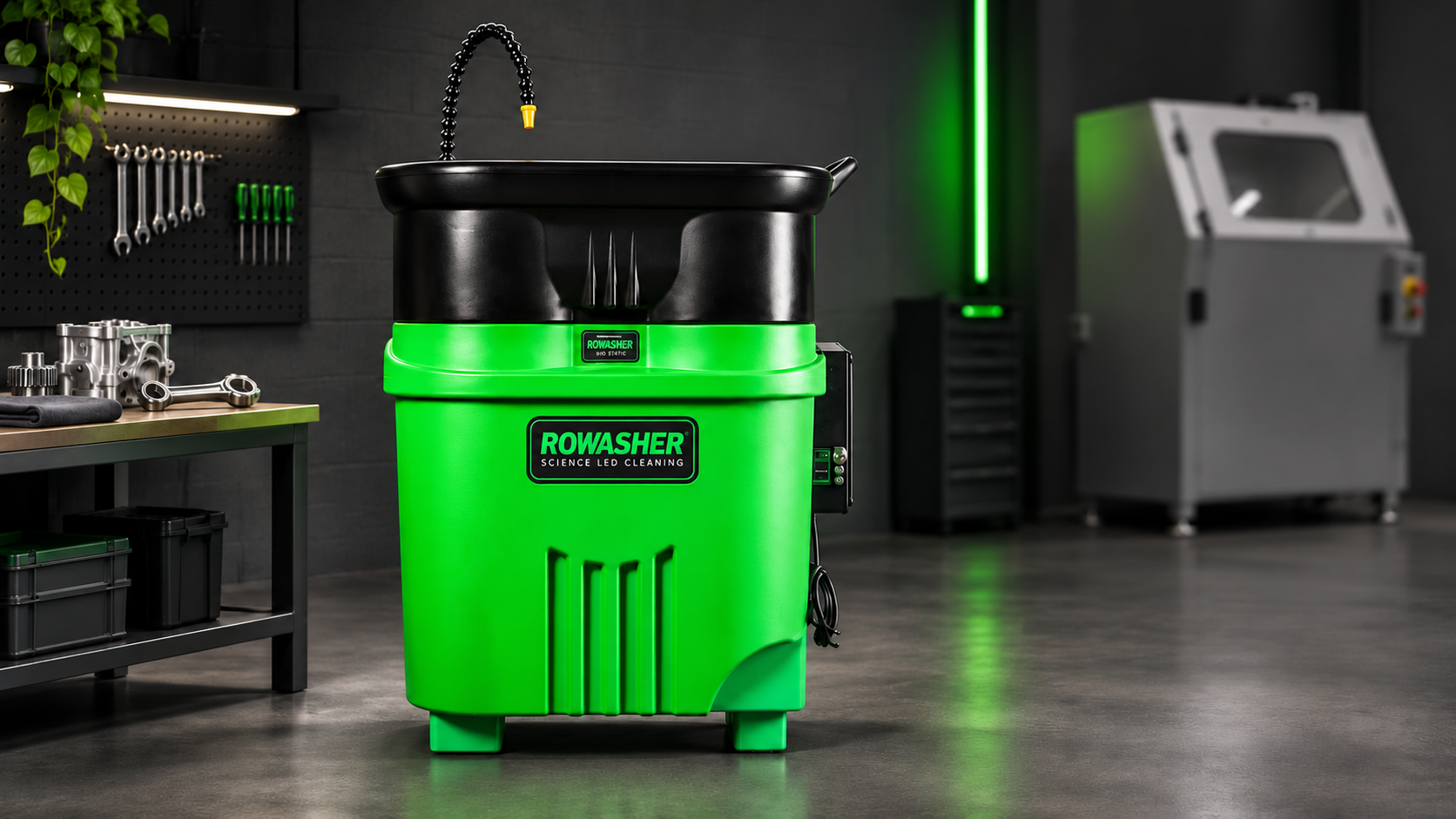
Bioremediating Parts Washers vs Aqueous Spray Cabinets
Compare manual bioremediating parts washing with automatic aqueous spray cabinets, including workflow, fluid care and practical selection questions.

Cutting Energy Costs: The Efficiency of the ROwasher Eco-Mode
Sustainability in the modern industrial workshop extends beyond simply eliminating hazardous chemicals; it requires intelligent energy management. As electricity costs continue to fluctuate across Aus…

Revolutionising Bicycle Servicing: The Benefits of a Dedicated Bike Parts Washer
A practical guide to bicycle parts washing: cleaning workflows, measuring workshop time savings, choosing suitable fluid and following component cleaning instructions.

Redefining Workshop Workflow: The Ergonomic Advantage of a Mobile Parts Washer
When optimising an automotive dealership, aviation hangar, or heavy diesel facility, management often focuses entirely on the speed of the diagnostic tools or the power of the hoists. However, one of the most significant drains on daily profitability and workplace safety is hidden in plain sight: workshop logistics and mechanic "walk time."

Safely Degreasing Massive Production Equipment with the XL ROwasher
When evaluating new industrial equipment, Australian asset managers and manufacturing leads require more than just technical specifications; they need proven, real-world validation. The ability of a parts washer to handle standard automotive components is one thing, but stripping heavy grease from oversized, industrial-scale machinery requires a fundamentally different class of equipment.
How to Maximise Uptime with a Low-Maintenance Bioremediating Parts Washer
A practical ROwasher maintenance checklist covering daily fluid checks, monthly microbial filter changes and annual servicing, based on manufacturer guidance.
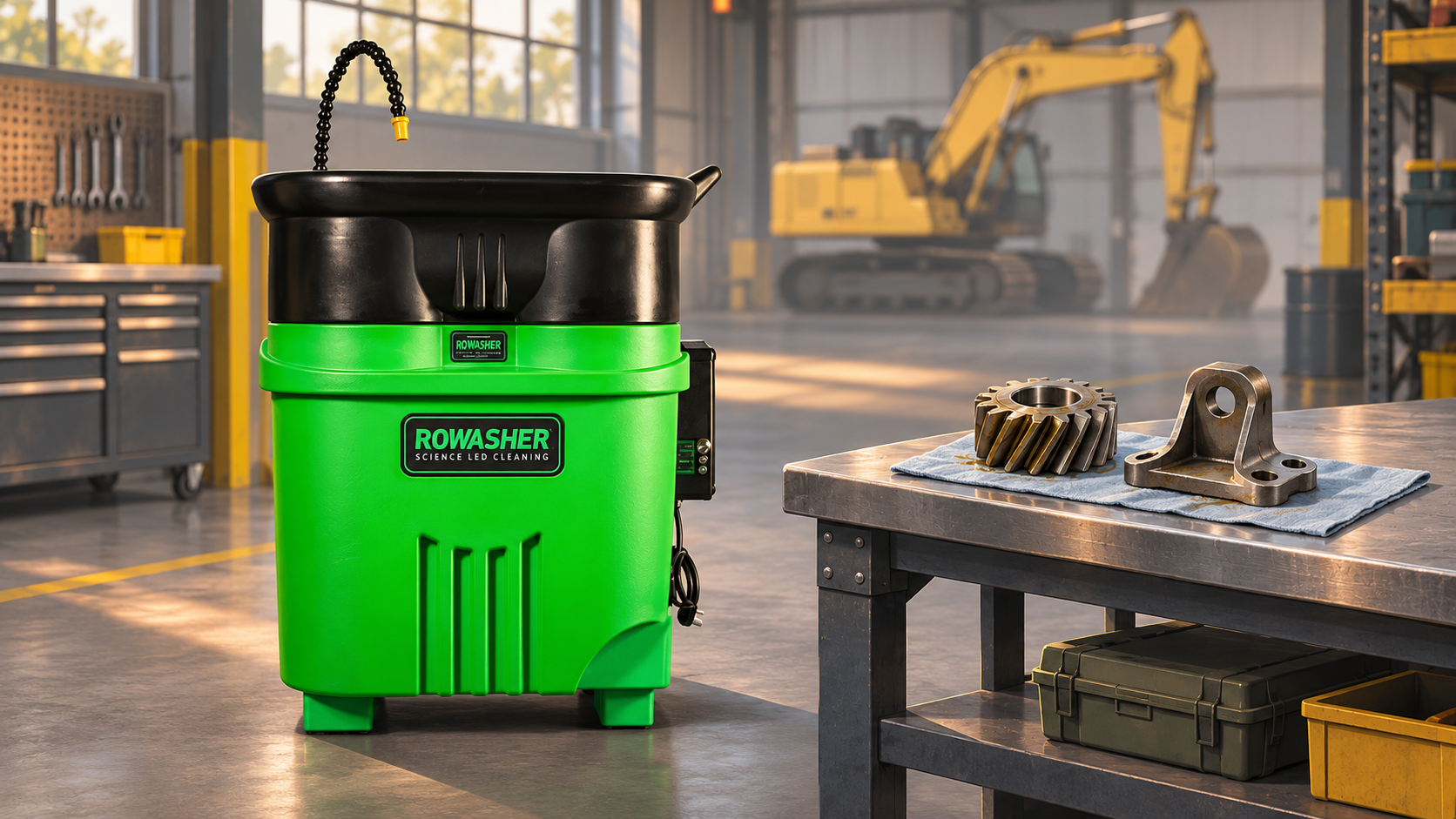
Stripping Grease from Heavy Earthmoving and Mining Machinery
The mining, excavation, and heavy-duty diesel sectors operate in some of the most unforgiving environments on the planet. The equipment servicing these industries is subjected to extreme friction, heavy particulate contamination, and massive amounts of protective grease. When it comes time for maintenance and rebuilds, standard cleaning solutions simply cannot handle the sheer volume of baked-on hydrocarbons.
Navigating EPA Regulations for Workshop Wastewater in Australia
A practical starting point for Australian workshops reviewing parts-cleaning waste. Learn what to ask your local authority, how bioremediation fits into the process, and why used filters, sludge and spent fluid still need appropriate handling.

The True Cost of Solvent Parts Washers vs. Bioremediation Systems
Compare parts-washer running costs using your workshop’s actual fluid, filter, electricity, maintenance and waste-handling costs. Learn how bioremediation changes the cost breakdown and what to include in a realistic payback estimate.