
Choosing parts washer fluid starts with the machine and the parts, not the drum price. A fluid intended for one cleaning system is not automatically suitable for another. This checklist helps Australian workshops narrow the options before ordering or topping up a washer.
1. Start with Your Machine’s Instructions
Identify the exact washer model and the fluid already in it. Check its operating instructions for the approved chemistry, operating temperature and filling procedure. Manual solvent tanks, heated aqueous machines and bioremediating parts washers are different systems. Do not assume a product labelled “parts washer fluid” can be used in all three.
For an existing machine, confirm the changeover procedure before switching products. Do not mix cleaning fluids or add a general-purpose detergent simply because both products are water-based. Compatibility advice and manufacturer warranty conditions are separate questions.
2. Describe the Parts and Contamination
Give your supplier the material and finish, not just the name of the part. Bare steel, aluminium, painted surfaces and an assembled component containing seals may need different treatment. Explain whether you are removing oil, grease, chain residue or another contaminant, and identify anything that must remain lubricated.
Follow the component manufacturer’s cleaning instructions, including limits on soaking, temperature, rinsing and drying. A fluid’s suitability for a material does not mean an entire assembly can be immersed. Electrical parts, sensors, bearings, coatings and seals need application-specific checks.
3. Understand the ROwash Options
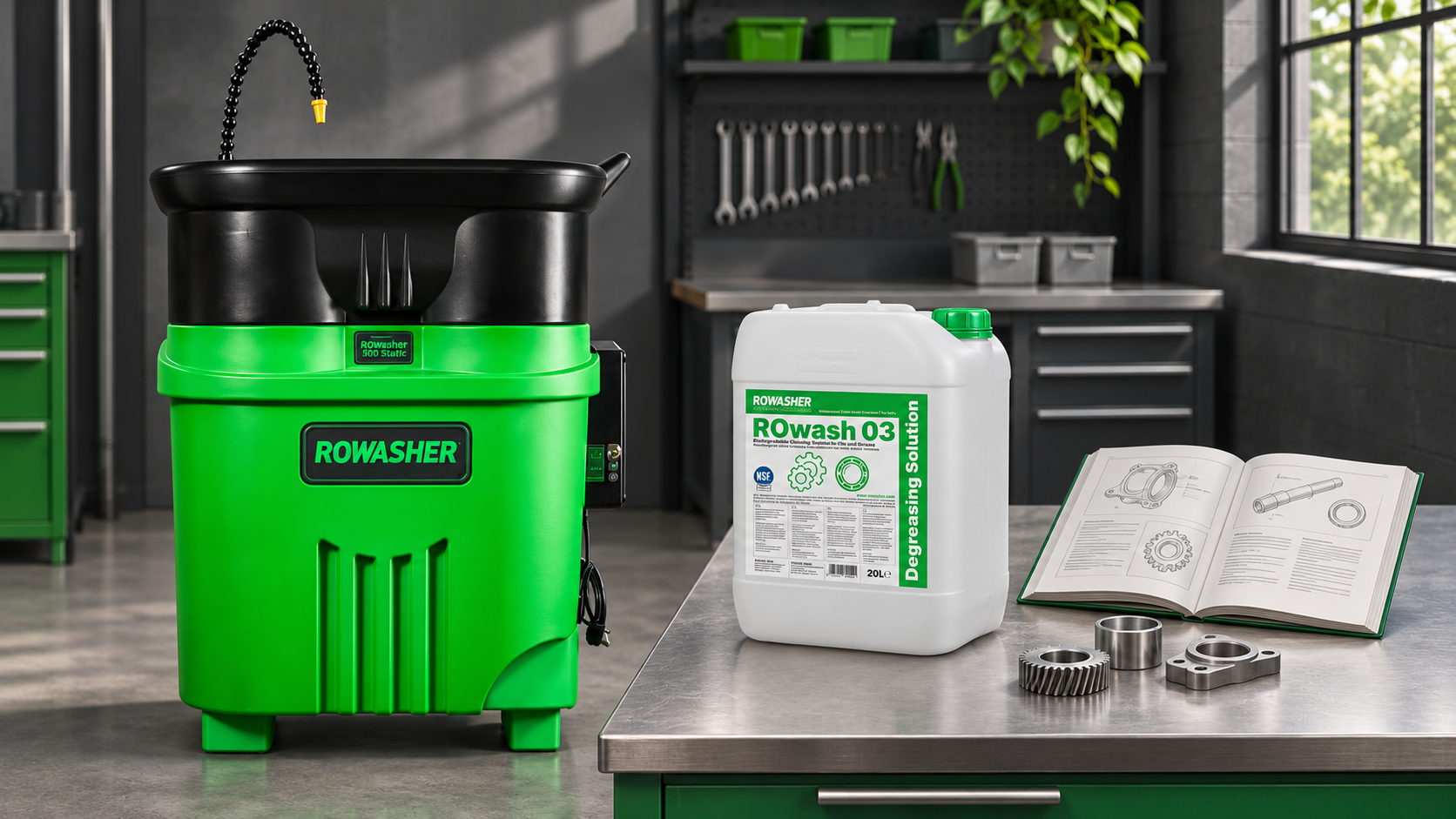
ROwash 03: Rozone’s general-purpose fluid for routine oil and grease removal. View ROwash 03.
ROwash 06: Rozone’s specialist-metals formulation, with corrosion inhibitors, for applications involving metals such as aluminium, steel and copper. Confirm the exact alloy, finish and cleaning process rather than treating it as a blanket approval for every metal component. View ROwash 06.
ROwash Bike: A bike-focused formulation for chains, drivetrain parts and workshop cleaning. Follow the bicycle or component manufacturer’s instructions; this is not permission to immerse electrical systems or sealed assemblies. View ROwash Bike.
These are application starting points, not interchangeable recommendations. Discuss the parts you clean before choosing a formulation.
4. Check Preparation, Care and Safety Information
Read the current label, safety data sheet and machine instructions together. Establish whether the supplied fluid is ready to use or requires a specified dilution. There is no universal dilution ratio for parts washer fluids: do not add water or concentrate without the applicable instructions.
A biological parts washer also needs the correct microbial filter and routine care. Bioremediation helps break down oil and grease in the fluid, but does not remove every contaminant or eliminate maintenance. See our ROwasher maintenance checklist. Handle used filters, sludge and spent fluid appropriately for the contamination they contain.
What to Send Us for a Fluid Recommendation
Tell us your washer make and model, current fluid, part materials and finishes, contamination, cleaning frequency and any component restrictions. Include your delivery postcode if you need a delivered quote. Ask ROwasher Australia about the right fluid for your application, or browse the ROwash fluid range.
Manufacturer references: ROwash 03, ROwash 06 and ROwash Bike. Check current product documentation before use.
Match the Fluid to the Job
Click Here to View Our Products
